CAMPAIGNs
Your footprint my footprint

Did you know that your diet is an important part of your carbon footprint?
Ask before you eat:
1.
How would you best describe your diet?
A large proportion of greenhouse gas emissions comes from food production, and meat and dairy are associated with much higher carbon emissions than plant-based food.
2.
In a week, how much do you spend on food from restaurants, canteens and takeaways?
Food bought in restaurants has a wider footprint than food you buy to cook at home because of the ‘overheads’ in the restaurants – the emissions associated with heating, lighting and cooking for your meal. Food from takeaways has additional packaging and additional transport emissions, from the means of getting it from the restaurant to your home.
3.
Of the food you buy how much is wasted and thrown away?
One third of all food produced is wasted. Every year wasted food in the UK represents 14 million tonnes of carbon dioxide emissions. In total, these greenhouse gas emissions are the same as those created by 7 million cars each year.
4.
How often do you buy locally produced food that is not imported to the country you live?
Buying local and seasonal food will generally result in a lower footprint. It depends how it’s produced and packaged, but it’s more likely to have a lower environmental footprint. Not that buying from abroad is necessarily a bad thing. Food grown in a sustainable way and traded fairly can be vital for developing countries. Buy thoughtfully.
© Jiri Rezak / WWF-UK
Calculate your footprint:
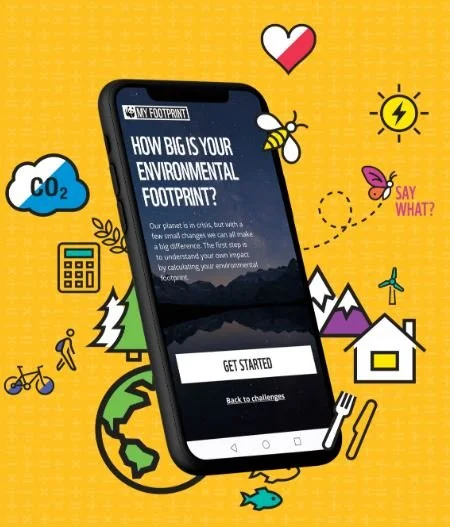
Here we introduce you to WWF´s a carbon footprint calculator, created with the Stockholm Environment Institute at the University of York, and the University of Leeds. Once you’ve answered all the questions in the quiz you’ll see the size of your carbon footprint, based on the information provided. This will help you track challenges to help you make small changes in your own life that add up to something bigger.